

Lessons of a curious reformer
17 Nov 2026
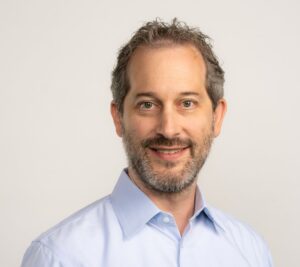
David Jacobstein
“I’ve come from Washington to tell you to listen less to Washington and more to the people around you who already have the insight and ideas you need.” It’s a strange way to approach a conversation as an advisor, but for many years, this has been in a nutshell how I introduced myself before offering workshops or trainings on a number of tools and approaches. And it turned out to be a pretty useful thing to say for a number of audiences! But before I get into that, let me share a little about who I am and what my role has been in various organizations.
Since I was small, I’ve been interested in fighting injustice. My grandmother survived the Holocaust, and her experiences have coloured family lore for years. She talked about having the guts to ask a camp commandant for an office job for her father, using her good German skills, and managing to save him for a time. She also talked about the German factory manager who kept his slave labourers from some of the worst horrors, and who she honored years later as one of the righteous.
Her story not only set my feet toward trying to change the world, but also sparked my sense of curiosity. How could someone serve the Nazi regime and still take personal risks to protect Jews? How do ordinary people get swept up in historic events, and what makes some resist? How do big ideas like nation or religion lead to action, for both good and ill?
“How do ordinary people get swept up in historic events, and what makes some resist? How do big ideas like nation or religion lead to action, for both good and ill?”
After college, where I majored in the history of nationalism, I planned to go to law school, part of a path to fight injustice. In the interim, I found a job supporting legal reform in Eastern Europe. There I met Ludmila, a woman just out of college who was serving as the strategist behind our work to support judicial reform. The Moldovan judges were not in a hurry to change their system, and certainly wouldn’t listen to her. Luckily, we had a retired American federal judge who had the gravitas and gray hair needed to speak with the judges and highlight important ways that they could improve their courts’ speed and fairness by making reforms in small areas such as judicial training, assignments, or how rulings were published. I helped research and prepare materials supporting new approaches, and saw that I could find ways to contribute with my curiosity and collaboration. I also realized I didn’t need a law degree, just a commitment to help and a dedication to learning and understanding, and charted a different path.
I found roles in a few non-profits working on strengthening civil society where I was mentored by pioneers in capacity development who keenly saw the promise offered by our partner local organizations, and also all the ways that this approach fell short, often due to unspoken power dynamics or strange compliance requirements. As someone involved in lots of grants management, I saw increasingly the connection between what international assistance set forth as its purposes and objectives, and how it operated, with feedback loops in both directions that constrained how well it could work.
Eventually I became a civil servant, working for USAID on democracy programming. My role was in support of several internal reform efforts (you can read much of my thinking here) and it gave me a huge opportunity to try to improve the internal conceptions of our work and its success in ways that would resonate through the mechanics of project design, management, and monitoring and allowed both greater partner agency and better long-term results. Tasked with helping USAID make grants to local CSOs, I managed to parley this into seeding reform efforts to change how we partnered and how our projects were run. This eventually led to a good Local Capacity Strengthening Policy that emphasized being asset-based, supporting mutuality, and restraining a rush to measure the wrong things. I co-wrote policy on systems thinking as core to an understanding of sustainability, promoting the value of diverse perspectives and how to work with people holding different views, and the importance of understanding impact as a set of relationships that allow societies to be more resilient and adaptive. We helped create a body of work around systems practice and a community that still exists beyond the ashes of USAID (if you are interested to join, sign up here).
“Paying attention to why different people might have a stake in the status quo, or at least not be in a rush to push for change, was new and often led to stronger ideas for projects, more rooted in local community realities.”
I also co-led for many years the team that promoted political economy analysis, through which we found ways that democracy goals could be pursued through work in health, education, environment, and other sectors. Our community of practice motto was “be curious, not judgmental” (borrowed from Walt Whitman) and we trained staff that before they could work to change situations, they needed to deeply understand why things looked like they did, and why others hadn’t already sparked change. For folks used to working backwards from how things ought to be, paying attention to why different people might have a stake in the status quo, or at least not be in a rush to push for change, was new and often led to stronger ideas for projects, more rooted in local community realities. The quotes I started with were among those I used in this role as a permission granter: I offered formal justification and permission to people in many different places to rely on local understandings, elevate existing change agents, and better define and measure results around what really mattered. I could provide the bureaucratic scaffolding that enabled those more authentic approaches to be embedded in the formal language and processes of USAID, and the encouragement that they could join a guild of people all working in these ways, sharing the risk of pushing back on received understandings didn’t work.
In a stroke of luck, I also served as USAID’s liaison to the Global Alliance for Community Philanthropy, and discovered that numerous others around the globe were already working in ways that went beyond the ideas I’d supported so far – building on the agency, power, and trust within communities, oriented towards strengthening the people and their sense of themselves rather than using their efforts to accomplish something else. This felt profoundly right to me – that we understood the strength of the community as more important than specific social change they would accomplish in a year or two. This experience reshaped my understanding of democracy — not as a set of procedures, but as a lived culture of mutual recognition and trust.
“And it turns out that the weavers and everyday leaders who are driving change in their communities do so less as an analytical approach, by pursuing the right goals, and more as a stance or position in relationship to the world.”
More recently, with the destruction of USAID, I’ve been engaging more with these ideas and concepts at a granular level in trying to support change in the much smaller space of my home town, while still staying in dialogue with many brave folks around the world still pushing to build better societies, and I’ve had new epiphanies. Essentially the axis of my career was to see how if we could understand our objectives clearly, and understand how change happens in the world properly, we could organize our efforts for greater success. I still believe this, but I’ve also been reminded – as we often said in political economy trainings – that it isn’t enough to know what should happen, you need to be able to make that change occur. And it turns out that the weavers and everyday leaders who are driving change in their communities do so less as an analytical approach, by pursuing the right goals, and more as a stance or position in relationship to the world.
While I think the work I pursued in large institutions to shift their purposes was meaningful and contributed to change, I’ve come to believe that meaningful social change stems less from strategic positioning and more from who we choose to be in the world. For me, that means continuing to show up, as a thinker, an ally, and a connector; curious as ever, and committed to amplifying the wisdom already in our communities.
By: David Jacobstein, Johns Hopkins SAIS and Council, Systems Practice Community. David can be reached on LinkedIn or at davidjacobstein311@gmail.com. Read other pieces from David: