

Before Kathmandu: Building a trellis for change
19 Oct 2026
This piece forms part of a series of essays about Possible Now, see the others:
- Blossoming at a new dawn – 30 years of Indonesia for Humanity
- Coming alongside Possible Now: From social innovation to a good society
- Democratic futures at stake: Reflections from the elections in Brazil for the Possible Now movement
- Dignity isn’t the by-product of development. It’s the foundation.
- Exploring the future of a good society – relational networks focused on collective change and transformation
- From garden minds to garden practice: Supporting organizational regeneration while the ground is still shaking
- Possible Now and the journey from machine mind to garden mind
- Unlearning, relearning and learning anew
- What is Possible Now? What are the ideas and dynamics involved in its construction?
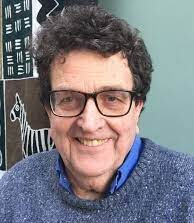
Barry Knight, GFCF Adviser and Visiting Professor at the University of Staffordshire
When Jenny Hodgson asked, “What is possible now?”, she opened a door. Since then, around 300 people have walked through it – in gatherings in Nepal, Kenya and the UK, as well as in many online conversations. From 2 – 4 December, many more will meet in Kathmandu at the Possible Now #ShiftThePower Global Summit, bringing experiences of mutual aid, rotating savings, feminist leadership, solidarity economies and community philanthropy. These and other practices model a new way of organizing in the world, so that we might renew our shared humanity and enable everyone to flourish.
My new book, A New World is Rising: Power, Consciousness, and the Renewal of the Human Story, asks: how do we turn many promising initiatives into a movement capable of changing the wider system?
I have conceived the book as a “trellis” rather than a “framework.” The difference is that a trellis works with the life that is already there, offering a structure on which living things can grow together. The book draws on detailed research and is written for the activists and organizers who are bringing a new world into being.
Here are five ways it can help us prepare for Kathmandu.
1. It turns crisis into opportunity
We are in a deep crisis. Though painful and frightening, it can loosen the grip of old ways and make room for alternatives. As Jenny writes in the book’s Foreword, the old certainties have gone, and with them many old constraints. Those at the edges are least bound by legacy structures and don’t wait for permission. The question for Kathmandu is whether we can organize to use that space – not to restore what was lost, but to build something better.
2. It gives us a common language
Possible Now asks how we can co-create a different system by connecting the small but powerful initiatives already underway. Connection requires a shared language. The book builds one around Sue Goss’s distinction between “machine mind” and “garden mind.”
Machine mind tries to control a system from above: define the problem, design the intervention, measure the output. Garden mind recognizes that life self-organizes, and that people cultivate healthy systems through the relationships they shape together based on trust, diversity and care. Complexity science tells the same story: order in living systems arises from countless local interactions, not central command.
With this language, a women’s savings circle, a youth climate movement, a worker cooperative and a city council that shares power with its residents can see how their very different work contributes to a common transformation. The aim is connection, not uniformity. In a garden, diversity is the strength.
3. It shows the new world is already growing
A single experiment is easy to dismiss. In North-East Syria, amid war, the Kurdish-led experiment known as Rojava has built self-government through neighbourhood communes and cooperatives, with every office shared by a woman and a man as co-chairs. In the Andes, Buen Vivir – good living rooted in reciprocity and balance with nature – has travelled from indigenous communities into the constitutions of Ecuador and Bolivia. In Bologna, residents and the city co-govern abandoned buildings, parks and gardens as “urban commons.” In Jackson, Mississippi, Cooperation Jackson is bringing vacant land and homes into community ownership and building a solidarity economy of worker cooperatives, lifting the power of African American communities.
The book argues that these are not isolated innovations but part of a broader transformation. This perspective matters politically. Public debate still centres on governments, leaders and established institutions, so the hopeful developments all around us struggle to add up to a visible alternative. Yet history shows where change comes from. The US Civil Rights Act of 1964 followed years of bus boycotts, sit-ins and marches. In the Netherlands, repeated climate blockades of a motorway in The Hague prompted parliament in 2023 to vote to phase out fossil fuel subsidies. Disabled activists, insisting on “nothing about us without us”, turned disability from a medical issue into a human rights issue, now enshrined in a UN Convention ratified by more than 180 countries. In each case, organized people led, and elites followed.
4. It offers a strategy
Neal Lawson’s “45-degree change” offers a model for how change happens. Organized communities create pressure and demonstrate alternatives. Sympathetic people within institutions – foundations, local government, international agencies – help those alternatives secure resources, legitimacy and room to grow. Each needs the other. Without movements, insiders lack a mandate; without insiders, movements struggle to spread.
For funders, this is a new job description: moving beyond financing individual projects towards strengthening relationships, collective capacities and community-owned institutions that enable change to take root.
Kathmandu brings both sides into one room. The challenge is to leave with more than shared inspiration: stronger relationships, clearer priorities and practical commitments that connect community-led experiments with the institutions capable of helping them grow.
5. It reminds us what the work is for
The book draws on Martin Luther King Jr’s vision of the Beloved Community: people bound together by justice and care, refusing to give up on one another. The deepest movements are not only about winning. They are about becoming the people a new world demands.
Something like that community is gathering around Kathmandu, and its hosts embody it. For three decades, Tewa – the Nepal Women’s Fund, has shown women in Nepal how to fund their own change, building dignity and power from the ground up. Together with the GFCF and Accountability Lab Nepal, Tewa is hosting Asia’s first #ShiftThePower Global Summit. That is the garden in practice.
Bring it to Kathmandu
Drawing on social science, complexity science and long-standing philosophical and spiritual traditions, the book gives a wider intellectual foundation to the change communities are already creating. Published by Palgrave Macmillan, it is open access and free to everyone, everywhere: you can download it here. Read it with colleagues, bring your questions and disagreements, and come to Kathmandu ready to connect your work to a larger project of social transformation.
The new world is already growing in communities worldwide. Our task is to build the trellis that helps its many shoots find one another, take root and flourish. That is what makes Possible Now – and Kathmandu – matter.
By: Barry Knight, an adviser to the GFCF and Visiting Professor at the University of Staffordshire. A New World is Rising: Power, Consciousness, and the Renewal of the Human Story (Palgrave Macmillan, 2026) is available free as an open-access e-book and in hardback at £29.99.
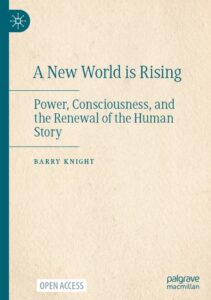 Book launch! A New World is Rising will be launched on 11 November 2026 at the October Gallery, London, with Matthew Bolton of Citizens UK, Neal Lawson of Compass and Jenny Hodgson of the GFCF speaking. Book your place here.