

What is Possible Now? What are the ideas and dynamics involved in its construction?
28 Oct 2026

This piece originally appeared in Portuguese on the LinkedIn page of Graciela Hopstein. Published here, it forms part of a series of essays about Possible Now, see the others:
- Before Kathmandu: Building a trellis for change
- Blossoming at a new dawn – 30 years of Indonesia for Humanity
- Coming alongside Possible Now: From social innovation to a good society
- Dignity isn’t the by-product of development. It’s the foundation.
- Exploring the future of a good society – relational networks focused on collective change and transformation
- From garden minds to garden practice: Supporting organizational regeneration while the ground is still shaking
- Possible Now and the journey from machine mind to garden mind
- Unlearning, relearning and learning anew
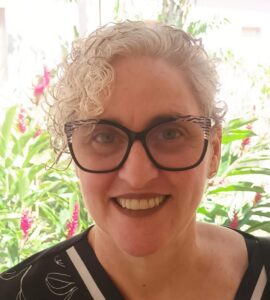
Graciela Hopstein, Possible Now Stitching Fellow
This article aims to present Possible Now to the various actors working in the fields of philanthropy and civil society in Brazil. It was developed based on the reflections brought by Jenny Hodgson in the blog published in April 2026, Possible Now and the journey from machine mind to garden mind, and in my paper The crisis of democracy and civil society: Challenges and perspectives in the context of the #ShiftThePower movement. The objective of this text is to share some reflections guiding its construction, considering that it is an open and ongoing movement of creation.
Possible Now emerged in the context of the crisis that began in 2023, marked by the shrinking of funding for civil society, particularly from international cooperation, against the backdrop of the global rise of the far right. This radical shrinkage of resources has primarily hit rights agendas focused on the recognition of political minorities, pejoratively grouped under the label of “woke agendas.” This movement has also impacted the field of traditional philanthropy, which, following international funding trends, began repositioning its work and directing investments toward other fields, such as impact businesses and agendas related to ESG (Environmental, Social and Governance).
The profound funding crisis that peaked in 2024 with the closure of USAID represented a rupture — that is, a paradigm shift whose central focus was to halt and retaliate against the struggle for access to and recognition of rights, as well as social justice and democracy agendas. This is because the funding crisis we are facing is neither economic in origin nor linked to a scarcity of resources; quite the contrary: capitalism has never accumulated so much wealth (concentrated in the hands of a few), so it is, in fact, distinctly political. Certainly, the dynamic of rupture — which is the most appropriate concept to explain the current scenario — also sparked a deeper disquiet, revealing a truth that many civil society and movement actors have always known: that dependence on external resources was a complex and high-cost strategy, as in the long run it ultimately compromised the autonomy, political role and struggles waged in the social organization sector, creating peer competition and weakening the very social fabric that makes collective action possible.
Possible Now emerges as a movement to seek collective solutions to this crisis / rupture. This is due to the fact that, through it, the exhaustion of an international funding model based on dynamics of progressive capitalist economic development — intersected by inequality, injustice and the legacies of colonialism — became evident. At the same time, it became clear, as mentioned above, that this model brought complex consequences for the political and economic sustainability of social organizations and movements, placing obstacles and brakes on capabilities for creation, experimentation and dynamics of innovation.
Possible Now is a conversation in constant construction and production unfolding across the Global South and North. It is a continuation and / or outgrowth of the #ShiftThePower movement, rooted in recognizing the power of community experiences and practices, territories, and ancestries that seek not only to recognize cultural and identity diversities, but to promote solutions for the collective construction of the common good. It is a space for the emergence of new questions related to building a new grammar of the common, of a necessary civic infrastructure that enables the emergence of new flows and connections capable of strengthening collective intelligence and shifting dominant institutional models, overcoming isolation and giving rise to multiple innovations.
As Jenny Hodgson states in her blog, “Possible Now is not a new programme, a branded initiative or a campaign. It is an invitation to co-create a garden of alternatives and contribute to a new social and funding architecture that can emerge from community dynamics,” from their needs and demands, rather than being imposed top-down, so that it is then shaped by ideas based on experimentation instead of dynamics of control. The movement recognizes the need for an urgent paradigm shift, “moving away from the logic of machine mind — typical of predatory capitalism — to the wild garden mind.” Machine mind assumes that we can build something to “fix” or solve problems and continue operating under the logic of crisis and its management or restoration. In the metaphor of the wild garden, life self-organizes through cooperative networks, struggle and the resistance of movements, without agendas or pre-determined purposes imposed by external actors, but grounded in the logic of immanence and the recognition of the power of the common.
The wild garden is sustained by strong root systems, by rhizomes that connect as relational infrastructures through shared norms and networks of care at the heart of all communities and movements in struggle. Just as plants with deep roots and tough fibres are more resilient and therefore have a better chance of surviving and recovering from wildfires, for example, communities with strong, robust and interconnected systems are better prepared to face and recover from adversity and external shocks.
The moment we are facing is crossed by countless uncertainties, and the transition from one model to another will certainly not be smooth. “Navigating the current system while imagining a possible future is generating tension and concern, not least because the existing system will continue to create intense institutional management demands” as well as to adopt and / or adapt governance structures capable of dealing with, and responding to, the imposed funding restrictions and limitations and the political crisis we are facing against the backdrop of the rise of the far right.
Institutional structures that evolved to enhance an organization’s “institutional development” may generate certain efficiencies and effectiveness, but they are certainly less conducive to experimentation or risk-taking in pursuit of the new. To think through and build a new system, another possible world, we need an open, plural laboratory and a collective intelligence oriented toward the common good.
In turn, the Possible Now Stitching Fellowship — a programme in which I participate as a Fellow, and which brings together a diverse group of people from the Global North and South committed to these dynamics — aims to promote Possible Now through various strategies and actions in multiple spaces, seeking connections and ongoing dynamics of debate and collaborative exchanges. It involves providing financial resources to conveners who seek to explore big questions through the lens of emergent practices and break down category barriers and silos — which have so often artificially divided us — with the goal of building a broader “us.” The work carried out under this initiative aims to connect different realities and foster systemic and political consciousness across diverse civil society spaces. “The mission of the Fellows is to listen, reflect, convene, translate, create and align.”
Between 2 — 4 December, the Possible Now #ShiftThePower Global Summit will be held in Kathmandu, organized by the GFCF — the organization investing organically in Possible Now — in partnership with Accountability Lab Nepal and Tewa. However, attending the Summit in Nepal is not a prerequisite for getting involved in these dynamics, as the idea is to act at global, regional and local levels so that we can effectively, as Airton Krenak asserts, not only postpone the end of the world, but contribute to building another present and possible future.
By: Graciela Hopstein, Possible Now Stitching Fellow